Tuesday, December 8, 2009

Walker Evans Research Project - Part 2

Photojournalism began in the mid 1800s. Events that were considered news were photographed at first and printing presses used engravings until the 1880s. Innovations in photography led to the printing of photographs on presses by 1897. The “golden age” of photojournalism went on between the 1930s-1950s. Some newspapers and magazines were popular because of the photography. Life Magazine was considered to be one of the most read magazines between 1936 and the early 70s. It exposed a great deal of people to photojournalism. Photojournalism and documentary photography are considered as a form of art today.


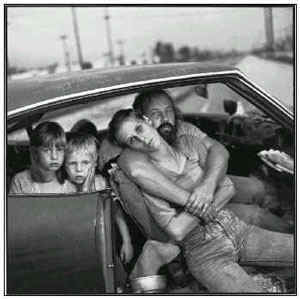
Documentary Photography is a type of photojournalism that focuses on a certain subject. The purpose of the photographs is to show the reality of the subject and teach the viewer about places, people or a time in history.


The main artists in the photojournalism genre are Carol Szathmari, Kenneth Kobre, Don McCullin, Susan C. Zavoina, John H. Davidson and Grahan Clarke.
The main artists in the documentary photography genre are Berenice Abbott, William Eggleston, Robert Frank, Lee Friedlander, Jim Goldberg, Nan Goldin, Lauren Greenfield, Lewis Hine, Dorothea Lange, Mary Ellen Mark, Steve McCurry, James Nachtwey, Gordon Parks, Eugene Richards, Jim Richardson, Jacob Riis, W. Eugene Smith, Gary Winogrand and Sally Mann.
Walker Evans was the first photographer to make art from something that did not appear to be art. “His work embodies a way of seeing that at once is entirely Evans’ and stands upon him.” His work was considered an important part on American documentary photography. He was considered a genius in his ability to show the reality of The Depression in this art form. He was against photographs that were too commercial or artsy.

End Notes:
Quote 1: http://en.wikipedia.org/wiki/Photojournalism
Photo 1: http://myjournalism.files.wordpress.com/2009/03/photojournalism_002.jpg
Photo 2: http://sarahwichlacz.com/wp/wp-content/uploads/2006/05/docume2-1.jpg
Photo 3: http://www.docuphoto.com/images/activists/200x300/activist.jpg
Book 1: Walker Evans 55


Walker Evans Research Project - Part 1

Name: Walker Evans


Walker Evans was an American Photographer. He was born on November 3rd, 1903 in St. Louis, Missouri. He was best known for his work for the Farm Security Administration, documenting the effects of the Great Depression. He graduated from Phillips Academy in Andover Massachusetts and studied French literature for a year at Williams College. He then dropped out and spent a year in Paris. He then returned to the United States to join the art crowd in New York City. His closest friends were John Cheever, Hart Crane and Lincoln Kirstein.
Walker Evans took up photography in 1928 and in 1933 he was assigned to photograph in Cuba for the publisher of Carleton Beals’ book, The Crime of Cuba. His overall goal as a photographer was to make pictures that were “literate, authoritative and transcendent.”
In 1935, he spent two months on a fixed-term photographic campaign for the RA (Resettlement Administration) in West Virginia and Pennsylvania. He continued to do photographic work for the RA from October on, and that’s when he decided to do photographic work for the Farm Security Administration.
In 1936, Walker still worked for the Farm Security Administration and he and writer James Agee were sent by Fortune magazine on an assignment to Hale County, Alabama. This photographic assignment was for a story that the magazine opted not to run. During his stay there, he stayed with three, white, tenant families in southern Alabama during The Great Depression. Walker took pictures of the families and their emotional looks from the depression.


After the depression he went on to work for Time-Life and then he began photographing in color at Fortune.
Walker Evans died on April 10th, 1975 in New Haven, Connecticut.
Walker Evans’ genres were documentarian and photojournalist. These genres were meant to reveal a piece of history. His work was a portrait of America. Walker Evans had very interesting style to his photos. When he was younger he made his photos really busy, but as he got older they started to become more minimal. He used black and white photography to capture America. His photos were mostly dark and many were angular. Many of the photos were of buildings with angular and geometric lines. These buildings were run-down and looked deserted. He also focused on signage and people as his subjects. They were often photographed together. There were strong lines in his work. Some of his photos were crisp, but most had many shadows which give them a darker and sadder tone. His photos were a reflection of the times. He showed a damaged world and desperate times in his shots of The Great Depression. For example, his piece titled, “Truck and Sign,” even showed men loading a sign that said, “Damaged” onto a truck that said, “Globe.”


The composition of his work allowed us to see the deeper meaning that he was intending.


End Notes:
Photo 1 - http://www.danthewoodsman.com/wp-content/uploads/2008/12/800px-walker_evans_1937-021.jpg

Quote 1 - http://en.wikipedia.org/wiki/Walker_Evans

Photo 2 - http://www.masters-of-photography.com/images/full/evans/evans_hale_county.jpg

Photo 3 - http://albertoalonso.files.wordpress.com/2009/07/trodd-walker-evans-01.jpg

Photo 4 - http://www.luminous-landscape.com/images2/damage-we.jpg


Thursday, November 12, 2009

Contrasting Forms


The concept of contrasting forms is to get a picture where an object or subject is the foreground of a picture and an object or subject is the background of a picture. This balances the picture out. The first picture of the powerline pole applies to this concept because the powerline pole is the foreground of the picture and the parking meter is the background of the picture. The car behind the parking meter is also a great background to the picture. The second picture of the powerline pole applies to this concept because the powerline pole is the foreground of the picture and the recycling bin is the background of the picture. You could also say that Alastair, Julian and Zaina make a great background for this picture as well. The third picture of the parking meter applies to this concept because the parking meter is the foreground of the picture and the green truck is the background of the picture.


Repetition/Perspective


The concept of repetition/perspective pictures is to get a good shot of objects in a repetative form such as piano keys and telephone poles. The first picture of the windows applies to this concept because the windows are repetative. The second picture of the trees applies to this concept because the trees are repetative. The third picture of the muni power line poles applies to this concept because they are repetative as well. The picture of the trees is my personal favorite because I believe that it shows the greatest repetition out of the other pictures.


Leading Lines


The concept of leading lines is to get a picture of a road, pathway or a line itself and balance it out with the background. The first picture of the alleyway applies to this concept because the pathway is the leading line and the end of the alleyway is the background. The second picture of the sidewalk applies to this concept because the sidewalk is the leading line and the sky is the background. The third picture of the sidewalk by Drew applies to this concept because the sidewalk is the leading line and the traffic lights ahead are the background.


Thursday, November 5, 2009

Contrasting Forms

Nikos
http://images.google.com/imgres?imgurl=http://www.travelphotoblog.com/archives/red.jpg&imgrefurl=http://www.travelphotoblog.com/archives/002895.shtml&usg=__OaxfigN6JFhbnQMO2SuqvIxQosg=&h=263&w=350&sz=38&hl=en&start=65&um=1&tbnid=UwUpt5brMQrcUM:&tbnh=90&tbnw=120&prev=/images%3Fq%3Dforeground%2Band%2Bbackground%26ndsp%3D18%26hl%3Den%26rlz%3D1T4GGLL_enUS300US300%26sa%3DN%26start%3D54%26um%3D1

Natasha Carsberg
http://images.google.com/imgres?imgurl=http://www.sculptureatwattyler.org/uploads/images/sculpture_340x340/dot-nat-carsberg.jpg&imgrefurl=http://www.sculptureatwattyler.org/index.php%3Fpage%3Dnatasha-carsberg&usg=__saglv5_BdWHbZe1hqoyMOQww5Gc=&h=340&w=340&sz=33&hl=en&start=37&um=1&tbnid=kPvl80Iqs6uFiM:&tbnh=119&tbnw=119&prev=/images%3Fq%3Dcontrasting%2Bforms%26ndsp%3D18%26hl%3Den%26rlz%3D1T4GGLL_enUS300US300%26sa%3DN%26start%3D36%26um%3D1

Claire Lewis

Nikos

The concept of contrasting forms is to get a picture where your object or subject is the foreground of the picture and where another object or subject is the background of the picture so it balances the picture out. The first picture of the man at the restaurant applies to this concept because he's the foreground of the picture and the table behind him is the background. The second picture of the statues applies to this concept because one of the statues is the foreground and the other statue is the background. The third picture of the car applies to this concept because the car is the foreground of the picture and the minature car next to it is the background. The fourth picture of the two men applies to this concept because one man is the foreground and the other man is the background.


Repetition/Perspective

Booray Perry
Petteri Lopponen

http://images.google.com/imgres?imgurl=http://farm2.static.flickr.com/1072/1269205825_22d1973d00.jpg&imgrefurl=http://www.flickr.com/photos/8279953%40N05/galleries/72157622418876404/&usg=__4yKYv8rO-4NEIe3h2fn7X3tXPjI=&h=333&w=500&sz=122&hl=en&start=10&um=1&tbnid=GmXJcKLMokrSkM:&tbnh=87&tbnw=130&prev=/images%3Fq%3Dphotography%2Brepetition%2Bwindows%26hl%3Den%26rlz%3D1T4GGLL_enUS300US300%26um%3D1

Jim Miotke


Dianna Paulk

The concept of Repetition/Perspective pictures is to get a good shot of objects in a repetative form such as piano keys and telephone poles. The first picture of the wedding applies to this concept because the chairs are all repetative. You could also view this as a leading line but I see it more as a Repetition/Perspective. The second picture of the windows applies to this concept because the windows are all repetative as well. The third picture of the boats applies to this concept because they're also repetative. The fourth picture of the stair railing definetely applies to this concept because the railing poles are repetative as they go up.